Showing posts with label Health. Show all posts

Saturday, June 18, 2011

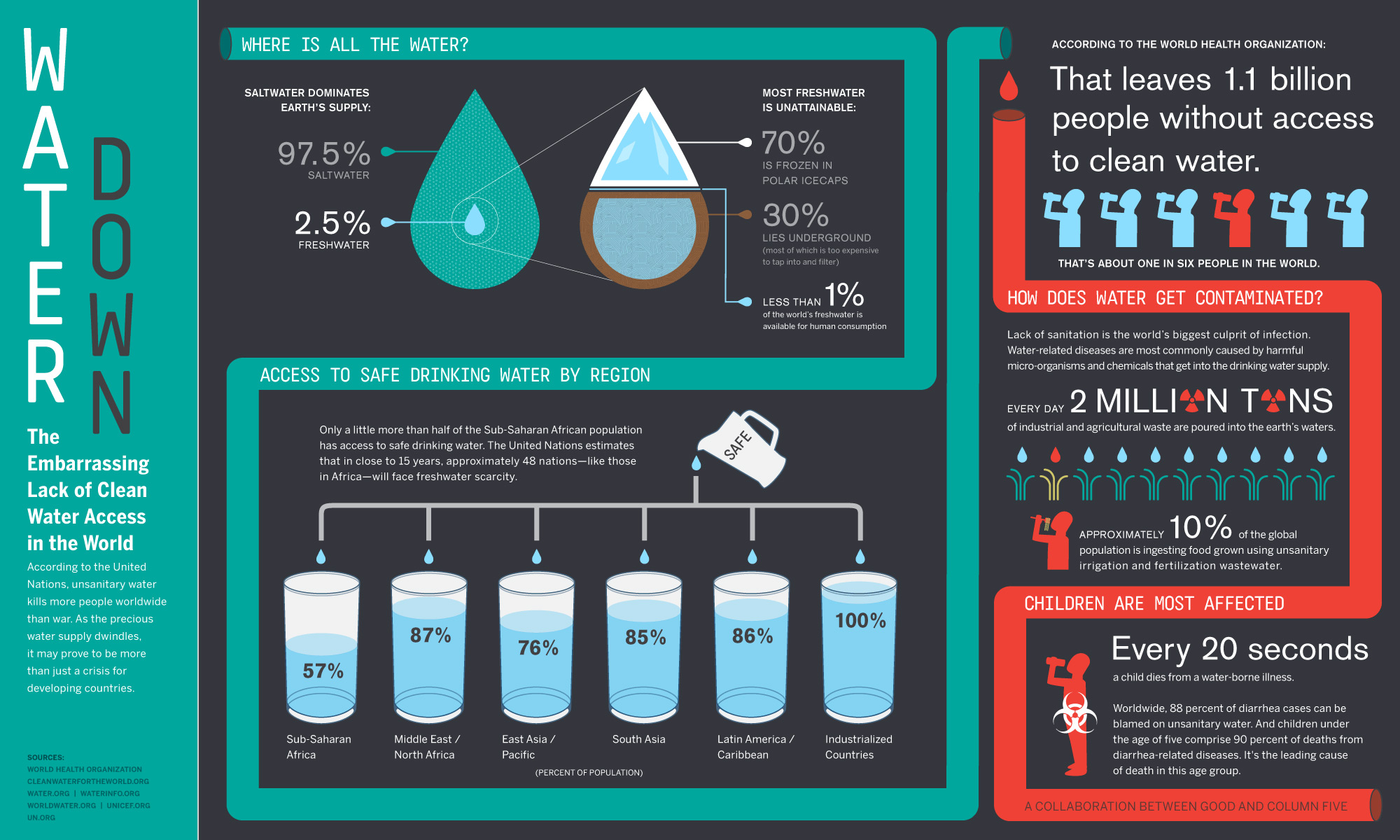
Why do so many people worldwide have no access to clean water?

About 70 percent of the planet is covered in water, but millions of people do not have access to clean drinking water. This infograph aims to explain the situation [Click on image to enlarge].


Source: GOOD.is | Not a Drop to Drink (Raw Image)

Tuesday, December 7, 2010

What is the difference between the common cold and the flu?

By Beat Schwendimann


Some interesting knowledge about the common cold:
  • The common cold is not the same as the flu (influenza). Both are viral infections and their symptoms are quite similar (coughing, sneezing, sore throat, runny or stuffy nose, headaches). However, there are differences:
    • The common cold symptoms can be caused by 100-200 different viruses. Rhinoviruses are the most important and cause at least one-half of colds. Cold viruses live only in the noses of humans and other higher primates, but not other animals. Contrary to common belief, you do not catch the common cold more often in the winter time because it is cold outside. The reason why people get viral infections more often in the winter is because they spend more time indoors in close proximity to other people, which makes it easier for the viruses to spread through aerosols. Once caught, there is still no effective cure for the misery of the common cold. The old adage that ‘a cold lasts for seven days if you treat it and a week if you leave it alone’ may still be true. However, vitamin C and zinc-rich foods might help.
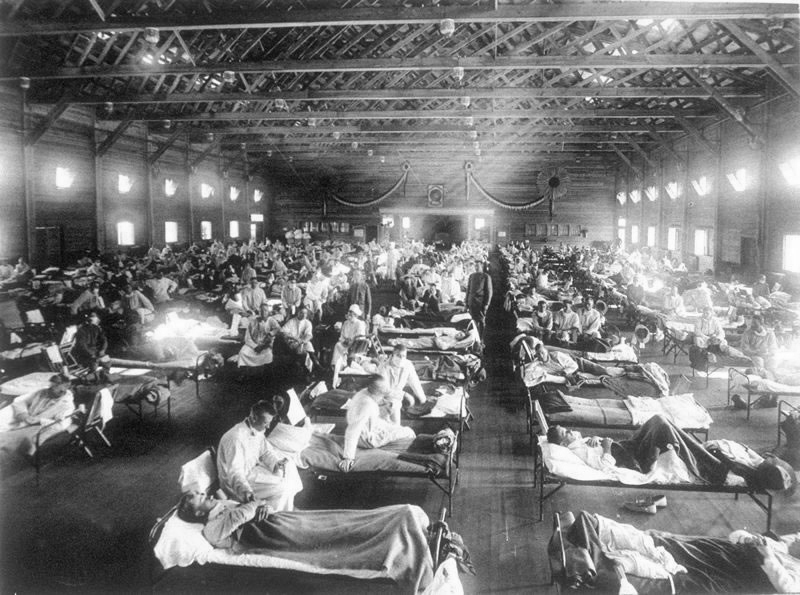
    • The flu is caused by RNA viruses of the family Orthomyxoviridae that affects both birds and mammals (e.g. bird flu H5N1, swine flu influenza A/H1N1). Influenza viruses frequently mutate, and can sometimes jump from one host species to another. Flu epidemics can cause large numbers of death. Three influenza pandemics occurred in the 20th century and killed tens of millions of people. The Spanish flu between 1918 and 1921 was one of the deadliest natural disasters in human history: Between 50 - 100 million (!) people died worldwide, especially young adults. Today, vaccines exist for a number of flu viruses, but new influenza viruses occur and frequently mutate.
US army hospital at Fort Riley, Kansas ill with Spanish influenza patients in 1918
  • Both the common cold and flu viruses are spread through airborne aerosols, which end up mostly on our hands. To limit the spreading of the viruses, wash your hands often, especially after coughing or sneezing. Avoid touching your nose or mouth. Don't sneeze or cough into your hands but in your elbow.
More info on the common cold: Colds: How You Catch a Cold

Tuesday, November 16, 2010

Robot Learns to Make Ethical Decisions

Researchers at the University of Connecticut are working on a robot that can make ethical decisions. Philosopher Susan Anderson and her research partner and husband Michael Anderson, a computer scientist, have programmed a robot to weigh decisions and make choices about what to do. In the video, the robot is asked to make a decision how often to remind a person to take medication.


Would you like to be dependent on a robot to take your medication?


Robot Makes Ethical Decisions : Discovery News

Monday, November 15, 2010

Correlation between night owls and high IQ found

Researchers found that people with higher IQs are more apt to be nocturnal night-owls. Those with lower IQs tend to restrict their activities primarily to daytime.


I wonder if the correlation between high IQ and going to bed late is also due to smarter people often being perfectionistic and having too much they are trying to finish before going to bed?
Smart people SLEEP LATE - Winnipeg Free Press

And a few fun facts about sleeping in the animal kingdom: Sleep parameters vary among animals. Cows, for instance, sleep open-eyed. Horses sleep standing up. Some birds can sleep in flight, others while standing. Dolphins sleep in one-half of their brain while the other half remains awake. Bats need 19.9 hours of sleep every 24 hours, lions need 13.5, rats 13, cats 12.5, whales 5.3, deer 3.1, giraffes 1.9, most birds three to eight and donkeys three.