Showing posts with label Psychology. Show all posts

Wednesday, October 22, 2014

Characteristics of a competent human being

What are the characteristics of a competent human being, a real man/woman?

"A human being should be able to change a diaper, plan an invasion, butcher a hog, conn a ship, design a building, write a sonnet, balance accounts, build a wall, set a bone, comfort the dying, take orders, give orders, cooperate, act alone, solve equations, analyze a new problem, pitch manure, program a computer, cook a tasty meal, fight efficiently, die gallantly. Specialization is for insects."
Robert Heinlein, Time Enough for Love

Or in other words:
“If you can keep your head when all about you 
Are losing theirs and blaming it on you,
If you can trust yourself when all men doubt you,
But make allowance for their doubting too;

If you can wait and not be tired by waiting,
Or being lied about, don't deal in lies,
Or being hated, don't give way to hating,
And yet don't look too good, nor talk too wise

If you can dream - and not make dreams your master;
If you can think - and not make thoughts your aim;
If you can meet with Triumph and Disaster
And treat those two impostors just the same;

If you can bear to hear the truth you've spoken
Twisted by knaves to make a trap for fools,
Or watch the things you gave your life to, broken,
And stoop and build 'em up with worn-out tools

If you can make one heap of all your winnings 
And risk it on one turn of pitch-and-toss,
And lose, and start again at your beginnings
And never breathe a word about your loss;

If you can force your heart and nerve and sinew
To serve your turn long after they are gone,
And so hold on when there is nothing in you
Except the will which says to them: 'Hold on!'

If you can talk with crowds and keep your virtue,
Or walk with Kings - nor lose the common touch,
If neither foes nor loving friends can hurt you,
If all men count with you, but none too much;

If you can fill the unforgiving minute
With sixty seconds' worth of distance run,
Yours is the Earth and everything that's in it,
And - which is more - you'll be a Man, my son!” 

― Rudyard KiplingIf: A Father's Advice to His Son

Wednesday, October 19, 2011

The world's most relaxing song

Researchers found in a series of experiment that the song "Weightless" by Marconi Union is the most relaxing song (see more here).

▶ MARCONI UNION - WEIGHTLESS by Just Music label:

'via Blog this'

Wednesday, June 1, 2011

How toy advertisements reinforce gender stereotypes

Blogger Crystal from Achilleseffect.com gathered key words from television toy advertisements targeted towards boys or girls. The gender stereotypes are striking when looking at the wordle pictures below.
Toy advertisements for boys
Toy advertisements for girls
Read more here: Word Cloud: How Toy Ad Vocabulary Reinforces Gender Stereotypes | The Achilles Effect

Sunday, May 8, 2011

Emotions and Decision-Making


I came across two seemingly unrelated articles and noticed an interesting connection.

-First, an article in the New York Times  celebrated the 300th birthday of philosopher David Hume. The article cited the following quote by Hume: "Hume argued that “reason alone can never be a motive to any action of the will.” Desire, for example, “arises not from reason.” And yet it can (and ought to be) “directed by it.”
-> Hume points out that an entirely rational model of decision-making is not feasible.

-Second, a blog entry on geekosystem described a new computer simulation that aims to model schizophrenia. There are multiple definitions of schizophrenia. This simulation builds upon the hyperlearning theory of schizophrenia, which holds that the disease springs from an inability to forget or ignore non-essential information. The human brain uses dopamine to mark certain information as essential. Dopamine is commonly associated with the reward system of the brain, providing feelings of enjoyment and reinforcement to motivate a person proactively to perform certain activities. In other words, the brain connects emotions to certain information to mark them as important. The computer simulation increased the virtual dopamine release which reduced the programs ability to distinguish important from unimportant information. 

Both articles address the same idea: Emotions are an important part of human thinking and decision-making. An entirely rational computer program without emotions can therefore never simulate human thought processes. Instead of seeing emotions as an opposition to rational thought processes, they should be seen as complementary (read more here about using emotions for decision making).


My model of decision-making includes five elements: 1) Rational, 2) Emotional, 3) Socio-cultural conventions, 4) available resources, and 5) political strategic. Both "conventions" and "strategic" factors are socio-cultural as we make different decisions depending in which social setting we are.

Thursday, November 18, 2010

Action games can improve visual attention


A research study conducted at the University of Rochester found that video computer gamers consistently perform better at visual attention tasks than non-gamers. Visual attention tasks consisted of picking up on a specific image within all the visual detail that falls into one's vision, such as the ability to quickly spot a friend’s face in a crowd. The effect was strongest among gamers who play action games such as first-person shooters.

Full article here: Action games “improve visual attention”

Tuesday, November 9, 2010

Conjoined twins share thoughts


A pair of conjoined twins named Tatiana and Krista Hogan, who were born four years ago in Vancouver, partially share brains: There’s a bridge between each girl’s thalamus, which could allow them to share sensory information and more.
One scientist who conducted tests on them concluded that “Their brains are recording signals from the other twin’s visual field … one might be seeing what the other one is seeing.”
Their grandmother is convinced that they can even share thoughts:
Adding to the conundrum, of course, are their linked brains, and the mysterious hints of what passes between them. The family regularly sees evidence of it. The way their heads are joined, they have markedly different fields of view. One child will look at a toy or a cup. The other can reach across and grab it, even though her own eyes couldn’t possibly see its location. “They share thoughts, too,” says Louise. “Nobody will be saying anything,” adds Simms, “and Tati will just pipe up and say, ‘Stop that!’ And she’ll smack her sister.” While their verbal development is delayed, it continues to get better. Their sentences are two or three words at most so far, and their enunciation is at first difficult to understand. Both the family, and researchers, anxiously await the children’s explanation for what they are experiencing.
Full fascinating profile on the Hogan twins and the implications their case has for neuroscience at Macleans.ca » Blog Archive A piece of their mind «

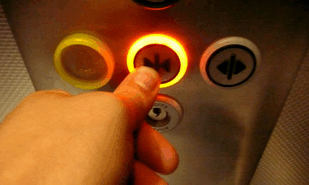
Placebo Effect: Elevator door buttons are dummies!


It seems the placebo effect isn't just valid on drugs. It's also a fact on elevators, offices and traffic lights. An article by Greg Ross says: 'In most elevators installed since the early 1990s, the 'close door' button has no effect. Otis Elevator engineers confirmed the fact to the Wall Street Journal in 2003. Similarly, many office thermostats are dummies, designed to give workers the illusion of control. "You just get tired of dealing with them and you screw in a cheap thermostat," said Illinois HVAC specialist Richard Dawson. "Guess what? They quit calling you." In 2004 the New York Times reported that more than 2,500 of the 3,250 "walk" buttons in New York intersections do nothing. "The citydeactivated most of the pedestrian buttons long ago with the emergence of computer-controlled traffic signals, even as an unwitting public continued to push on.

Slashdot Idle Story | The Placebo Effect Not Just On Drugs

Tuesday, November 2, 2010

Children really do see things differently


A study by  Jim Stone at the University of Sheffield, UK, in the journal PerceptionDOI: 10.1068/p6725 found that children do not see objects in a fully grown-up way until the age of 13. Children need to learn to distinguish between concave and convex, while adults learned to assume that objects are lit by a light source above it.


Children really do see things differently - life - 31 October 2010 - New Scientist