Showing posts with label proto-knowledge. Show all posts

Saturday, July 11, 2015

Monday, January 23, 2012


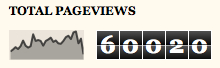
Over 60,000 page views total and more than 10,000 in the past two month. Thanks to all visitors of the proto-knowledge blog.

Thursday, December 1, 2011

Monday, June 6, 2011

Proto-Knowledge celebrates 30000th view!

The Proto-Knowledge blog celebrates over 30,000 page views. Many thanks to all the readers!

Tuesday, September 28, 2010

What is the difference between information and proto-knowledge?


Information is unconnected elements (concepts, ideas) that are perceived regularities of data. Information can be words or numbers.

The word "dog" is a piece of information. The letters d, o, and g are arranged in a certain way to describe a certain animal. "Dog" does not describe a particular dog but rather the regularity common to all dogs. Plato called concepts "idea or ideal", Aristotle called it "essence".

"2 13 11 5 8 6" are randomly arranged data. The numbers can be arranged "2 5 8 11 13" to reveal a regular pattern (increase by +3). Mean or median could also be determined.

However, a single word or a single number (information) is not meaningful to me in isolation. I need to see them in context - their relationships to concepts I already have in my mental framework.

Knowledge is information in context, therefore in connection to other concepts. However, knowledge that is not part of my mental framework is proto-knowledge.

Information becomes proto-knowledge if it fulfills four conditions:

-The proto-knowledge must be useful to me. Therefore, I can make connections to existing concepts in my mental framework.
-The proto-knowledge must be understandable to me. The concept must be connected in a meaningful way. I need to have existing concepts in my mental framework to connect the new concepts to. For example, I must already know the language or symbols the concept is represented in.
-The proto-knowledge must be accessible to me. If the proto-knowledge is in a database that is forever closed to me, for example a federal agency confidential database, then this information might be useful and understandable, but not available.
-Proto-knowledge consists of novel connected concepts that are not yet part of my existing mental framework.


What is Proto-Knowledge?


The world of ideas can be divided into different levels of organization.

-On the first level is data: I define data as unsorted numbers or letters. Data on its own carries no meaning. In order to become information, data must be arranged meaningfully.

-The second level is information: Information consists of isolated concepts that represent patterns (perceived regularities) found in data. For example a trend in statistical data, or words (concepts).

-The third level is Knowledge: For information to take on meaning, it must be interpreted by putting it into context with other concepts. Knowledge is a network of inter-connected concepts. This definition of knowledge is different from the classical philosophical understanding as"justified true belief". I understand connectedness as the central criterion for knowledge (without judging its truthfulness). People can hold concepts of varying truthfulness in their mental network.

-A fourth (and epistemologically different) level is meta-knowledge: Meta-knowledge (also called strategic knowledge or even wisdom) means knowing when to use knowledge.

So what is PROTO-KNOWLEDGE? Proto-knowledge is in-between information and knowledge. I describe proto-knowledge as potential knowledge. For example, a book that I have not read yet contains proto-knowledge. Once I have read the book and integrated the concepts of the book into my existing mental network it becomes actual knowledge that I can actively use for problem-solving and decision-making. Information in the internet is proto-knowledge. It is information, presented in context and connected to other ideas, for example through links, but I have not seen and integrated this information yet - thereby turning it into knowledge. Knowledge other people have but I do not is also proto-knowledge to me. After a person shares it with me, it becomes knowledge to me too.