A degree in STEM (science, technology, engineering, and mathematics) can offer a gateway to many great careers.
The poster below outlines possible career pathways for STEM graduates:
Download the poster as a high-resolution PDF here.
Source: http://findingada.com/resources/resources-for-schools/posters/
Showing posts with label Science Education. Show all posts
Monday, May 8, 2017
Tuesday, November 29, 2016
An updated view of the theory of evolution
http://www.sciencealert.com/the-world-s-top-biologists-have-met-to-discuss-whether-we-should-update-evolution
Thursday, August 18, 2016
Examples of recent evolutionary changes in humans
http://www.iflscience.com/plants-and-animals/7-strange-and-surprising-ways-that-humans-have-recently-evolved/all/
Wednesday, August 3, 2016
Advances in genetics class since your high school biology class
Over the past decades, the field of genetics rapidly developed, for example in the areas of inherited diseases, cancer, personalized medicine, genetic counseling, the microbiome, diagnosis and discovery of viruses, taxonomy of species, genealogy, forensic science, epigenetics, junk DNA, gene therapy and gene editing.
Joel Eissenberg, Ph.D., associate dean for research and professor of biochemistry and molecular biology at Saint Louis University School of Medicine summarizes major advances in genetics since the 1960s:
When Did You Go to High School?
If you took high school biology in the …
1960s, you learned about the structure of the double helix and how sequences of DNA encode amino acids.
1970s, you may also have learned about cloning and the potential for recombinant DNA.
1980s, your class may have covered the clinical use of recombinant human insulin for diabetes treatment and the advent of GMO foods.
1990s, your class may have studied the molecular basis for human genetic disorders, like cystic fibrosis.
2000s, your teachers likely described how the human genome was being sequenced.
You can find further information: http://www.slu.edu/news/2016/august/Eissenberg-genetics-essay.php
---------------------What’s changed in genetics since your high school biology class?: The field of genetics has seen astonishing breakthroughs and the development of world-changing technologies in the past half century.
Monday, May 23, 2016
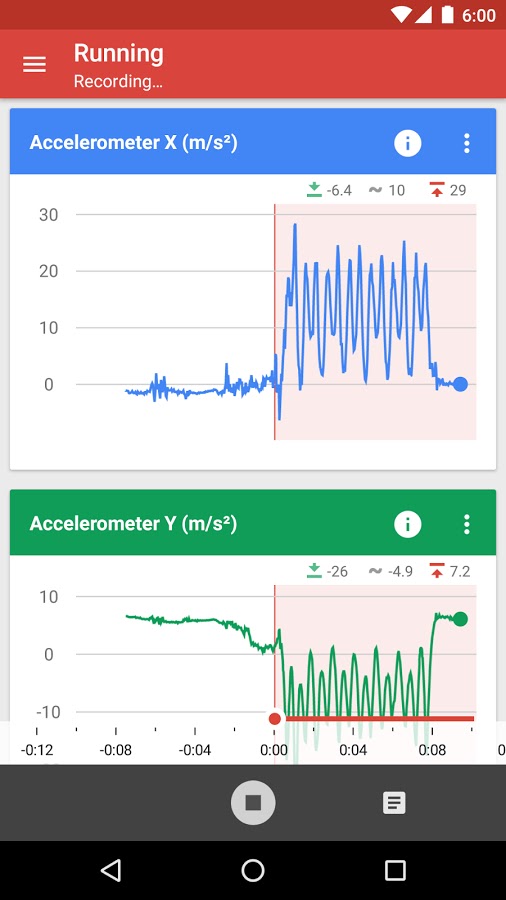
Google releases digital notebook app for STEM education called 'Science Journal'
![]() |
| Google 'Science Journal' app |
Wednesday, January 13, 2016
Do-It-Yourself Gene-Editing Kit for biology education
![]() |
| CRISPR Kit |
Moving genes from one organism to another used to be done only by big-budget labs. Three years ago, UC Berkeley developed the CRISPR gene-editing tool. CRISPR stands for 'Clustered Regularly Interspaced Short Palindromic Repeats', which refers to a protein(Cas9) that can use an RNA guide to make highly specific cuts in DNA. This allows unprecedented abilities to edit DNA. Zayer is the first to make the CRISPR tool kit available to the masses.
The DIY gene-editing kit allows altering bacteria and yeast (which can change color, fragnance, or living requirements). The DIY CRISPR kit is available for 120$: https://www.indiegogo.com/projects/diy-crispr-kits-learn-modern-science-by-doing#/
Read more here: Do-It-Yourself Gene-Editing Kit Transforming Biology | Sci-Tech Today
Tuesday, December 15, 2015
MEL science kit: Combining real and virtual science experiments
This chemistry kit combines hands on experiments with virtual ones (through Google cardboard). See more about the MEL science kit here.
Thursday, July 30, 2015
Wednesday, July 29, 2015
Why does a bicycle stay upright?
This informative video by MinutePhysics explains the physics behind a bicycle rolling down a hill.
Monday, June 29, 2015
Multi-level analysis strategy to make sense of concept maps
I presented my paper 'Multi-level analysis strategy to make sense of concept maps' at the sixth international conference on concept mapping in Santos (Brazil).
You find find more resources about concept maps here.
Friday, June 26, 2015
The difference between fruits and vegetables
This video explains why bananas are berries but strawberries are not.
Friday, January 9, 2015
What was missing from your science education?
![]() |
| Science Laboratory [Image source: http://www.chrisvandyke.com.au/data/photos/948_1science_lab1.jpg] |
My short essay for the NextGen contest got published in 'Science'. The question was: What was missing from your science education? See the article here.
STEM Education Apps You Need in 2015
This blog post lists 25 STEM Education Apps You Need in 2015. Some of them are free while others need to be bought.
I found the DAQRI anatomy 4D app particularly interesting: One can print out the markers and can then see an augmented human body. You can highlight different organs. See more here:
Tuesday, October 28, 2014
Friday, October 17, 2014
Comparing two forms of concept map critique activities
| Knowledge Integration Map (KIM) Source: Wikipedia |
I presented a paper at the 6th international conference on concept mapping in Santos, Brazil in October 2014 (See conference program with links to papers here). The paper introduces a new form of concept map, called Knowledge Integration Map (KIM). Different from Novakian concept maps, KIMs divide the drawing area into discipline-specific sections (see example above). Placing concept in these designated areas elicits how learners categorize these concepts and it highlights cross-links between sections. Cross-links can be seen as particularly interesting as they link concepts in different categories.
The empirical study presented in the paper compares two forms of KIM activities implemented in biology classrooms. Concept map activities often lack a subsequent revision step that facilitates knowledge integration. This study compares two kinds of concept map critique activities embedded in an evolution unit: Student dyads in one group compared their concept maps against an expert map while dyads in the other group conducted a peer-review. Analysis of the concept maps suggests that both treatment groups significantly improved their understanding of evolution. However, the two groups developed different criteria: The expert-map group focused mostly on concept-focused criteria like concept classification while the peer-review group used more link-focused criteria like link labels and missing connections. This paper suggests that both critique activities can be beneficial to making more coherent connections across different topics in biology.
The paper is available here (as PDF). The title of the paper is 'Comparing two forms of concept map critique activities to support knowledge integration in biology education'.
Thursday, October 9, 2014
Identifying fake physics in videos to teach physics
Popular videos often seemingly impossible jumps, throws, or dunks. Many of these videos have been manipulated.
Physics professor Rhett Allain wrote an interesting post about how you can spot if a video has been manipulated by analysing the physics. Allain's post could by used by physics teachers to teach about physics as well as a resource in a course about video editing. See Allain's post here.
Monday, July 28, 2014
Wednesday, July 16, 2014
Great movies for science geeks and science teachers
![]() |
| Mad Scientist (Source: http://content.science20.com/) |
Here is a short list of movies that do a better job at representing science (and show the scientist as a positive hero):
Name
of the movie
|
Focus
|
Longitude (2000)
|
Technology:
A clockmaker needs to collect convincing evidence to support the reliability
of his method to measure the position of ships out in the ocean.
|
Astronomy. An astronomer strives to
collect convincing evidence that the royal calendar is inaccurate.
|
|
The Andromeda strain
(2008)
|
Scientists run experiments to explore an alien virus.
|
Architecture. The challenges of
building a Japanese castle.
|
|
Agora (2009)
|
Astronomy. Conflict between religion and
science.
|
Subscribe to:
Posts (Atom)