Sunday, February 6, 2011

High-tech Biometric Wallet with fingerprint scanner

Dunhill Biometric Wallet
Dunhill's biometric wallet is made from carbon fiber and is "virtually indestructible" and will open only after scanning your fingerprint.

The wallet can be linked via Bluetooth to the owner’s mobile phone – sounding an alarm if the two are separated by more than 5 metres!

Unfortunately, this cool high-tech wallet comes with the steep prize tag of $825!

If you should have the necessary cash, you can order it here: Biometric Wallet | QGK0169 | dunhill

Meaning of country names

This map shows the etymology (origin of) the names of countries around the globe [Click on the map for a larger view].

Unfortunately, the map does not include references for further information.

etymology-map.jpeg (4500×2234)

Indian Supreme Court declares Astrology a Science


According to The Times of India, an Indian NGO called Janhit Manch filed the public interest litigation. But as the Supreme Court of India has already ruled that astrology is a science, the Mumbai High Court dismissed the case on February 3rd 2011. So far as prayer related to astrology is concerned, the Supreme Court has already considered the issue and ruled that astrology is a science. The Court had in 2004 also directed the universities to consider if astrology science can be added to the syllabus. The decision of the apex court is binding on this court.

This incidence reflects the struggle India finds itself in: Establishing India as an urban technology and science power, while large parts of the population are strongly religious and believe in astrology (including Supreme Court judges).

Read more here: Short Sharp Science: Indian court considers astrology a science

Solar Wind Bridge Design


Three Italian designers, Francesco Colarossi, Giovanna Saracino and Luisa Saracino, propose a new way to harvest wind energy without consuming valuable real estate. Between the pillars of a long-expanse bridge, a multitude of turbines capture wind energy from the faster-moving high-altitude currents - going both ways. The estimated energy production of Solar Wind is 40 million kWh per year.

The “Solar Wind” Bridge Design Harnesses Energy Two Ways

Does the Internet make children more gullible?

Professor Donald Leu, University of Connecticut, and colleagues showed teenagers a fictional website about a "tree octopus" and many took it for fact. The authors of the study conclude that schools need to teach students how to critically evaluate the trustworthiness of internet ressources.

The question arises how do you effectively judge the trustworthiness of a website? Do you trust information because it's being presented by a major website (for example the New York Times or BBC)? Do you trust a site that has a professional layout? To what degree can you trust information on Wikipedia? How do you find out about hidden agendas behind certain websites (for example pharmaceutical companies which host medical information websites)?


Video - Breaking News Videos from CNN.com

Wednesday, February 2, 2011

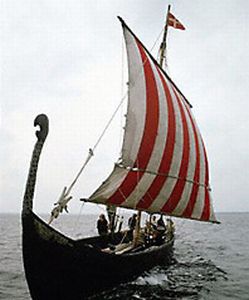
Viking used polarizing crystals for navigation

Vikings were skilled seafarers spreading from Sweden and Norway. They initiated settlements in Northern England, Iceland, Greenland, and may have been the first Europeans to arrive in North America.


The Vikings did not have compasses and used the sun and stars for navigation (in addition to coast lines and bird migration patterns). In the far north, they faced the problem of foggy weather that made it often difficult to see the sun.


Danish archaeologist Thorkild Ramskou suggested in 1967 that Vikings used so-called “sunstones”. A sunstone is a crystal that polarizes light passing through the clouds and makes it possible to determine the position of the sun. [See this video by NASA to see sunstones in action.]


Read more on Viking Sunstone Navigation here.

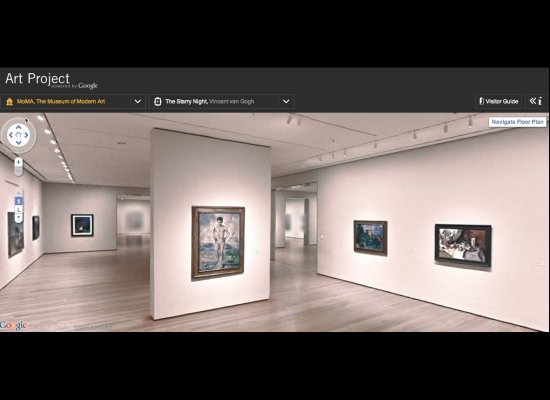
Google Art Project offers virtual tours through art museums


Google revealed it's newest project: The Google Art Project is an interactive online tour that takes users through some of the greatest museums in the world using a Google Street View-like interface.

The Google Art Project allows users to virtually explore the interior of 17 partner museums. The Google Street View team designed a brand-new vehicle called the 'trolley' to take 360-degree images of the interior of selected galleries. Eachimages contains around 7 billion pixels (more than 1,000 times more detailed than an average digital camera).


The Google Art project is in it's early stages, but certainly worth a visit: Google Art Project.


Google Art Project Aims To Redefine Museum Experience--But Has Some Rough Edges