Wednesday, February 9, 2011

Bringing Religion and Science together on Evolution Weekend


This weekend, Feb 11-13 2011 is the sixth annual Evolution Weekend. The event is sponsored by The Clergy Letter Project, an organization of more than 14,000 clergy members and evolution scientists that aims to find common ground between science and religion. 


Participants span a wide range of different christian denominations, Jews and Muslims; different ethnicities; Males and females; old and young; conservatives and liberals.

Being celebrated on the weekend closest to the birth of Charles Darwin (Feb. 12, 1809), Evolution Weekend participants aim to demonstrate that the modern theory of evolution and modern religious faith are fully compatible.

2011 is the International Year of Chemistry


According to the International Union of Pure and Applied Chemistry (IUPAC), 2011 is the International Year of ChemistrySee more information here: Home - International Year of Chemistry 2011


What would our world be without chemistry?

Tuesday, February 8, 2011

Could online courses fully replace traditional courses?

In his 2010 annual letter for the Bill & Melinda Gates Foundation, Bill Gates suggested that have at least one great course online for each subject rather than lots of mediocre courses. The idea is that students could freely access these "best possible" lectures online - which might in turn replace more mediocre real-life lectures.


Several top universities already offer some of their lectures online for free, including the Open Learning Initiative at Carnegie Mellon University M.I.T.’s OpenCourseWare program, Columbia, Harvard, Yale, Stanford, and the University of California, Berkeley. The UK-based OpenUniversity offers free online courses. Aggregator website Academic Earth offers a collection of over 150 full courses from different universities. Additionally, youtube edu offers a collection of lectures.


However, could such online lectures truly replace traditional education? There are several issues to hinder online courses to replace human-taught courses. First, online courses are notorious for high dropout rates. Personal relationships with instructors and other students might help students persevere. Second, many universities may now offer online lectures but complete courses consists of more than just the lecture, for example discussion groups, feedback from instructors, study groups, and office hours. These elements are currently missing in free online courses. Third, while lectures might be freely available, universities do not give credit for studying them. Free online courses do not (yet) lead to academic degrees. A step in this direction was taken last year by the regents of the University of California when they approved a proposal to test the viability of offering a bachelor’s degree that could be earned entirely online.


Read more in this New York Times article: Online Courses, Still Lacking That Third Dimension - NYTimes.com

Prehistoric Fish Still Alive Today

Frilled Shark
See this fascinating list of pre-historic fish that are still with alive today: Top 10 Prehistoric Fish Alive Today

See this youtube video of a frilled shark in action:

The Human Radio Bubble in the Milky Way

The first AM radio broadcast was on Christmas Eve, 1906, and the opening ceremony of the 1936 Olympics is regarded as the first video signal powerful enough to be carried into space.


How far did human-generated radio and video signals travel since then? Our radio bubble is about 200 light years (the diameter of the small blue dot in the enlarged section below). Compared to the vast size of the Milky Way (which is just one of many galaxies in the universe), our own presence seems rather insignificant. 


[Click on picture to see it full size.]

Read more here: The Extent of Human Radio Broadcasts in the Milky Way | Geekosystem

Monday, February 7, 2011

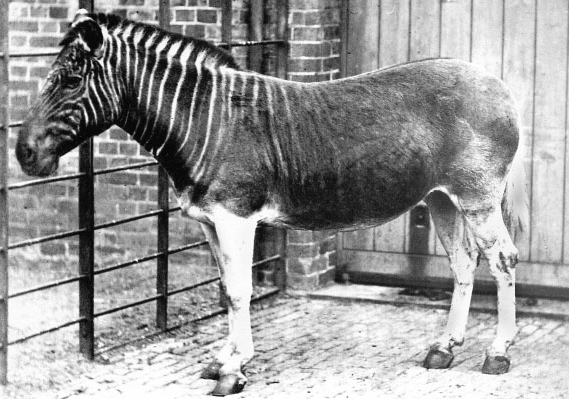
Animals brought to extinction by humans

Quagga (extinct since 1883)
Neatorama has an interesting but sad list of seven animals that are now extinct because of human interference, from the tasmanian tiger and the Quagga to the Dodo and the passenger pigeon.

See list here: 7 Animals Humans Brought to Extinction

Sunday, February 6, 2011

Prehistoric humans had foxes as pets


Honey, I am taking the fox for a walk....
Before dog became man's best friend, our ancestors might have kept foxes as pets.

Bones from a pre-historic burial ground (about 16,500 years old) in northern Jordan indicate that people got buried with their favorite pets, which include dogs as well as foxes.

I find it interesting to imagine how our world would look different if humans adopted foxes instead of dogs as our pets; current dogs breeds are variations of original Asian wolves (read more about evolutionary origins of dogs here). Imagine how many different breeds of pet foxes we might have instead.