The OECD launched its measure of well-being which includes 20 different indicators across 11 sectors in its 34 member countries (from life satisfaction to air pollution). You can see their interactive tool that shows details for each variable and country.
The chart below shows the results of its headline Better Life index (which is equally weighted) plotted against GDP per person at purchasing-power parity (which adjusts GDP for differences in the cost of living across countries). Can money buy you well-being (and happiness)? The chart below seems to indicate such a correlation...
Read more here: Well-being and wealth: The pursuit of happiness | The Economist
Friday, May 27, 2011
Wednesday, May 25, 2011
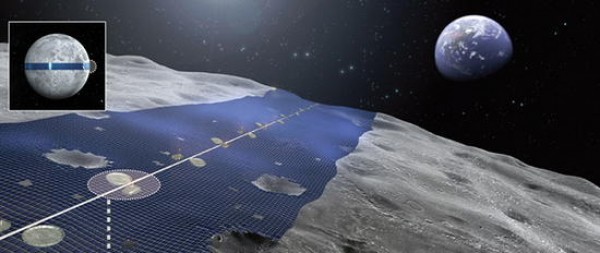
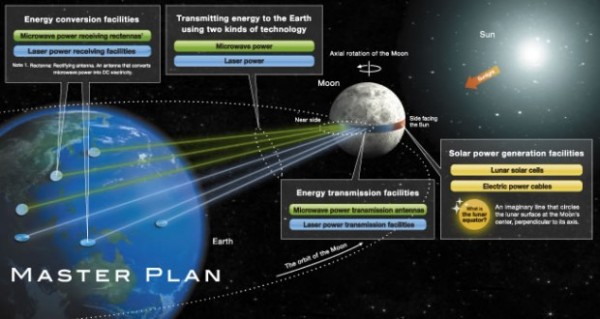
Japanese company plans to build a ring of solar panels around the moon
The Japanese Shimizu Corporation construction firm’s research branch, CSP, unveiled a long-term planning project to install a belt of photovoltaic panels across the surface of the Moon. Power gathered from the 13,000 terrawatts of continuous solar energy the Moon’s surface receives daily would be beamed back to an Earth-based receiving station via microwave or laser transmission. The costs for this visionary construction would be truly astronomical.
Read more here: LUNA RING: Solar Energy from the Moon
Japanese company developed car that runs on nothing but water
Japanese company Genepax developed an eco-friendly car that runs on nothing but water. The car has an energy generator that extracts hydrogen from water that is poured into the car’s tank. The generator then releases electrons that produce electric power to run the car. The electric powered car can run on any type of water. The car can run for an hour at about 80 km/h on just one liter of water. The Genepax car does not require that batteries be recharged and has no emission.
Read more here: Car that runs on nothing but water unveiled in Japan. No gasoline, no battery recharging and no emissions. | PRESS Core – Evidentiary News, World News, Special Reports, Technology, Health, Videos, Polls
Tuesday, May 24, 2011
Biologists found an entirely new branch on the tree of life - Cryptomycota
| Cryptomycota |
A paper published in Nature suggests that biologists in the UK have discovered an entirely new and unique branch in the tree of life, called cryptomycota. This group of microscopic organisms is related to fungus but are actually so different that they make up their own branch (clade) in the tree of life. Cryptomycota have remained hidden from sight even though it turns out they are everywhere, living in many different environments, including freshwater lakes and sediments, as well as pond water.
Sunday, May 8, 2011
Biometric IDs in India
In India, an estimated 500 million people have no form of reliable identification. The Indian government started $430 million initiative to use modern biometric methods to identify hundreds of millions of citizens. From each volunteer participant, the government collects 10 fingerprints, 2 iris images, and a photo, and if the new data don't match any identity already enrolled, it assigns the person a unique 12-digit number. After that, a single fingerprint or iris scan should be all that's needed to verify the identity of any person.
Gathering the biometric data is challenging in the rural population of India as many fingerprints have been obscured or erased by manual labor. The combination of fingerprint, iris image, and photo reduced false positive errors in 0.0025 percent of cases in the pilot study. Biometrics data are collected at government offices by government employees or private enrollment agencies. A single sensor can collect data from up to 50 people per day.
Once people received their biometric ID, their data can be used to provide them access to banking services and improve transparency for how support money reaches people living in poverty.
Emotions and Decision-Making
I came across two seemingly unrelated articles and noticed an interesting connection.
-First, an article in the New York Times celebrated the 300th birthday of philosopher David Hume. The article cited the following quote by Hume: "Hume argued that “reason alone can never be a motive to any action of the will.” Desire, for example, “arises not from reason.” And yet it can (and ought to be) “directed by it.”
-> Hume points out that an entirely rational model of decision-making is not feasible.
-Second, a blog entry on geekosystem described a new computer simulation that aims to model schizophrenia. There are multiple definitions of schizophrenia. This simulation builds upon the hyperlearning theory of schizophrenia, which holds that the disease springs from an inability to forget or ignore non-essential information. The human brain uses dopamine to mark certain information as essential. Dopamine is commonly associated with the reward system of the brain, providing feelings of enjoyment and reinforcement to motivate a person proactively to perform certain activities. In other words, the brain connects emotions to certain information to mark them as important. The computer simulation increased the virtual dopamine release which reduced the programs ability to distinguish important from unimportant information.
Both articles address the same idea: Emotions are an important part of human thinking and decision-making. An entirely rational computer program without emotions can therefore never simulate human thought processes. Instead of seeing emotions as an opposition to rational thought processes, they should be seen as complementary (read more here about using emotions for decision making).
My model of decision-making includes five elements: 1) Rational, 2) Emotional, 3) Socio-cultural conventions, 4) available resources, and 5) political strategic. Both "conventions" and "strategic" factors are socio-cultural as we make different decisions depending in which social setting we are.
Subscribe to:
Posts (Atom)